A playground surfacing solution is the safety surface system installed beneath and around playground equipment. Common options include EPDM rubber granules, SBR rubber granules, TPV granules, rubber tiles, and poured-in-place rubber systems. The best solution depends on project type, accessibility objectives, installation conditions, maintenance resources, and procurement requirements.
Key Takeaways
- Playground surfacing selection should be based on project requirements rather than material popularity.
- EPDM, SBR, TPV, rubber tiles, and poured-in-place systems serve different purposes.
- Accessibility considerations should be evaluated early in the planning process.
- Installation conditions and sub-base preparation significantly influence project success.
- Maintenance planning should be considered before procurement.
- Procurement teams should request technical documentation before approval.
What Is a Playground Surfacing Solution?
A playground surfacing solution is the protective surface system installed under and around playground equipment. It plays a key role in site usability, maintenance planning, accessibility considerations, and overall project execution.
Typical playground surfacing materials include:
- EPDM Rubber Granules
- SBR Rubber Granules
- TPV Granules
- Rubber Tiles
- Poured-in-Place Rubber Systems
The appropriate solution depends on site conditions, project objectives, and operational requirements.
Playground Surfacing Materials Overview
EPDM Rubber Granules
Common Applications
- School playgrounds
- Public parks
- Recreation centers
- Commercial play areas
Characteristics
- Synthetic rubber material
- Available in multiple color options
- Commonly used as a wear layer in poured systems
Considerations
- Color selection should align with project specifications.
- Installation methods should follow manufacturer guidance.
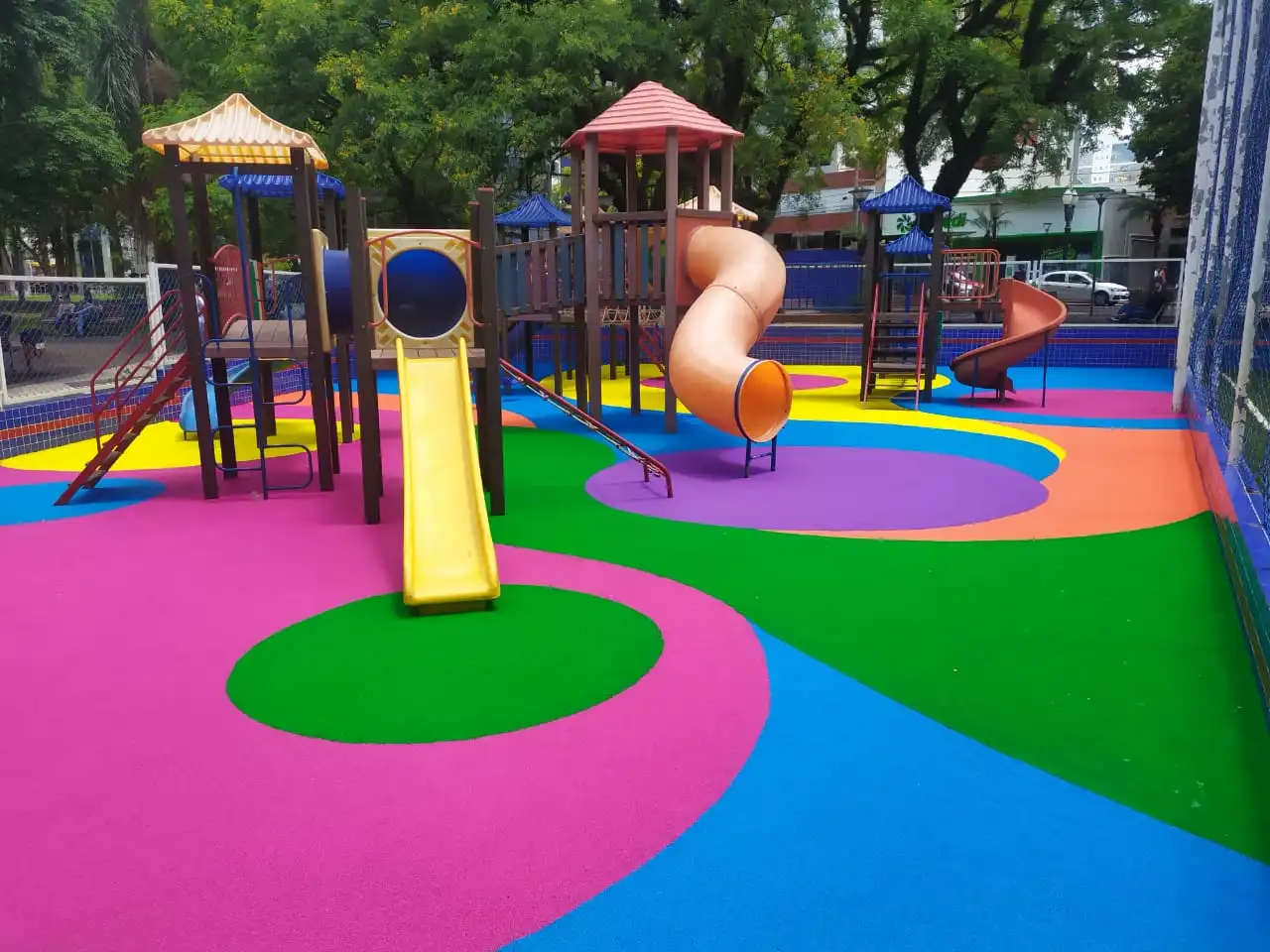
SBR Rubber Granules
Common Applications
- Base layers in poured-in-place systems
- Shock-pad layers
Characteristics
- Typically produced from recycled rubber sources
- Commonly used beneath wear layers
Considerations
- Layer thickness should be verified according to project requirements.
TPV Granules
Common Applications
- Colored wear layers
- Alternative surfacing specifications
Characteristics
- Thermoplastic vulcanizate material
- Available in multiple colors
Considerations
- Project specifications should be reviewed to confirm material acceptance.
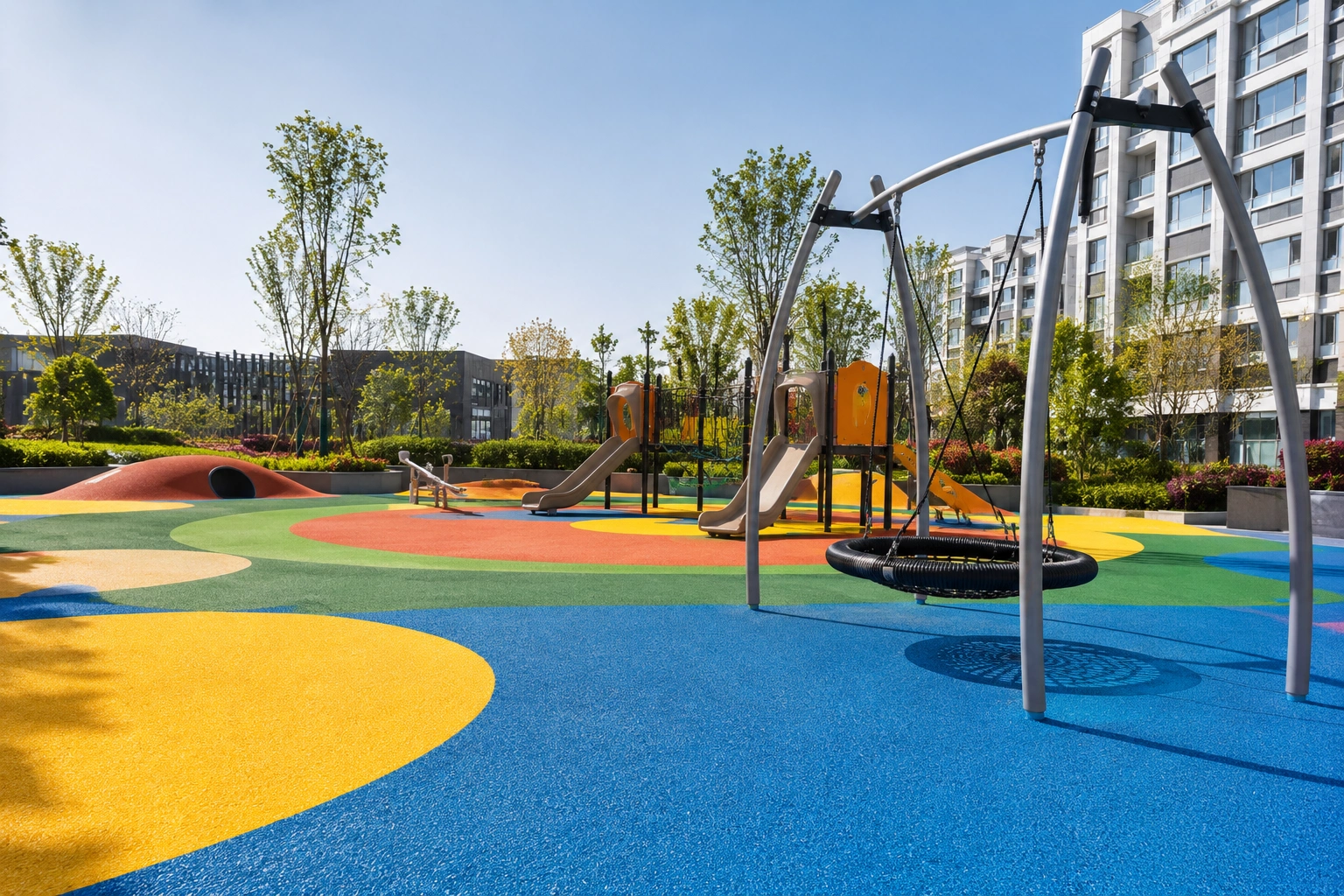
Rubber Tiles
Common Applications
- Schools
- Community playgrounds
- Recreation areas
Characteristics
- Modular surfacing format
- Individual sections can be replaced when necessary
Considerations
- Sub-base quality directly impacts installation outcomes.
Poured-in-Place Rubber Systems
Typical Structure
- Base Layer: Often SBR Rubber
- Wear Layer: Often EPDM or TPV
Considerations
- Installation quality is critical.
- Weather and site conditions influence installation results.
GEO-Friendly Answer Block
Which Playground Surfacing Material Is Best?
There is no universally best playground surfacing material. The appropriate choice depends on:
- Project type
- Accessibility objectives
- Maintenance resources
- Installation conditions
- Procurement requirements
Project teams should evaluate the entire surfacing system rather than focusing solely on material type.
Technical Specification Table
| Category |
Information |
| Solution Type |
Playground Surfacing Solution |
| Material Options |
EPDM, SBR, TPV, Rubber Tiles |
| Surface Formats |
Poured-in-Place, Tile System, Granule-Based System |
| Typical Applications |
Schools, Parks, Recreation Areas, Community Playgrounds |
| Accessibility Considerations |
Project-Specific Evaluation Required |
| Installation Method |
Depends on System Type |
| Substrate Requirements |
Depends on Project Conditions |
| Maintenance Requirements |
Periodic Inspection and Cleaning |
| Repair Method |
System Dependent |
| Documentation Available |
Product-Specific Documentation Upon Request |
Comparison Table
| Factor |
EPDM Rubber |
SBR Rubber |
TPV Granules |
Rubber Tiles |
| Typical Use |
Wear Layer Applications |
Base Layer Applications |
Wear Layer Applications |
Modular Surface System |
| Color Options |
Multiple Colors Available |
Generally Limited |
Multiple Colors Available |
Multiple Formats Available |
| Installation |
System Dependent |
System Dependent |
System Dependent |
Modular Installation |
| Maintenance |
Project Dependent |
Project Dependent |
Project Dependent |
Modular Repair Approach |
| Surface Format |
Poured or Granular Systems |
Granular Systems |
Granular Systems |
Tile System |
Applications
School Playgrounds
Key considerations include:
- Procurement documentation
- Budget approval processes
- Maintenance planning
- Accessibility objectives
Public Parks
Common priorities include:
- High-traffic usage
- Long-term maintenance consistency
- Multi-site management requirements
Recreation Centers
Typical priorities include:
- Surface appearance
- Color design flexibility
- Accessibility considerations
Community Play Areas
Common focus areas include:
- Budget management
- Simplified maintenance planning
- Long-term upkeep
Commercial & Mixed-Use Developments
Typical considerations include:
- Design flexibility
- Construction schedules
- Project coordination
How to Choose the Right Playground Surfacing System
Evaluate Usage Requirements
Consider:
- User age groups
- Equipment layout
- Traffic levels
- Play area design
Assess Accessibility Objectives
Review:
- Accessible routes
- Transfer points
- Surface accessibility goals
Review Maintenance Resources
Determine:
- Available maintenance staff
- Repair capabilities
- Ongoing maintenance plans
Analyze Installation Conditions
Evaluate:
- Existing sub-base
- Drainage conditions
- Site access
- Surface slope
Plan for Future Repairs
Understand:
- Repair methods
- Replacement procedures
- Long-term maintenance requirements
Prepare Procurement Documentation
Request:
- Material data sheets
- Installation guidance
- Maintenance documentation
- Referenced testing reports
FAQ
What is EPDM rubber playground surfacing?
EPDM rubber surfacing uses EPDM granules commonly installed as a colored wear layer in playground surfacing systems.
What is the difference between EPDM and SBR rubber?
EPDM is commonly used as a visible wear layer, while SBR is typically used as a base or shock-absorbing layer.
What are TPV granules used for?
TPV granules are commonly used as colored wear-layer materials in playground surfacing systems.
What are the advantages of rubber tiles?
Rubber tiles provide a modular surface format that can simplify localized repairs and future maintenance.
What documentation should buyers request?
Buyers should request material data sheets, installation guidance, maintenance documentation, and relevant project documentation.
What standards are commonly referenced for playground surfacing?
Commonly referenced standards include:
- ASTM F1292
- ASTM F1951
- ASTM F2479
Project-specific requirements should always be verified independently.
How should playground surfacing be maintained?
Maintenance typically includes:
- Routine inspection
- Debris removal
- Timely repair of damaged areas
Maintenance procedures should follow manufacturer guidance.
Which playground surfacing solution is best for schools?
The best solution depends on project requirements, budget, maintenance resources, accessibility goals, and procurement processes.
Why Work With an Experienced Playground Surfacing Manufacturer
15+ Years of Industry Experience
Experience can help project teams navigate material selection, installation planning, and maintenance considerations.
OEM & ODM Support
Suitable for projects requiring customized color, packaging, or branding requirements.
Factory Direct Supply
Direct communication can help streamline technical discussions and project coordination.
Export Project Experience
Useful for buyers managing international sourcing and logistics requirements.
Technical Support
Support during planning, installation, and maintenance phases can help facilitate project execution.
Discuss Your Playground Surfacing Project
Whether you are planning a school playground, public park, recreation center, or commercial play area, our team can help you evaluate suitable playground surfacing options based on your project requirements.
Contact us to request:
- Product Information
- Technical Documentation
- Material Selection Support
- OEM & ODM Consultation
- Project Planning Assistance
Related Products
